
CAMERA ASSISTANT - SP2027
Course Objectives:
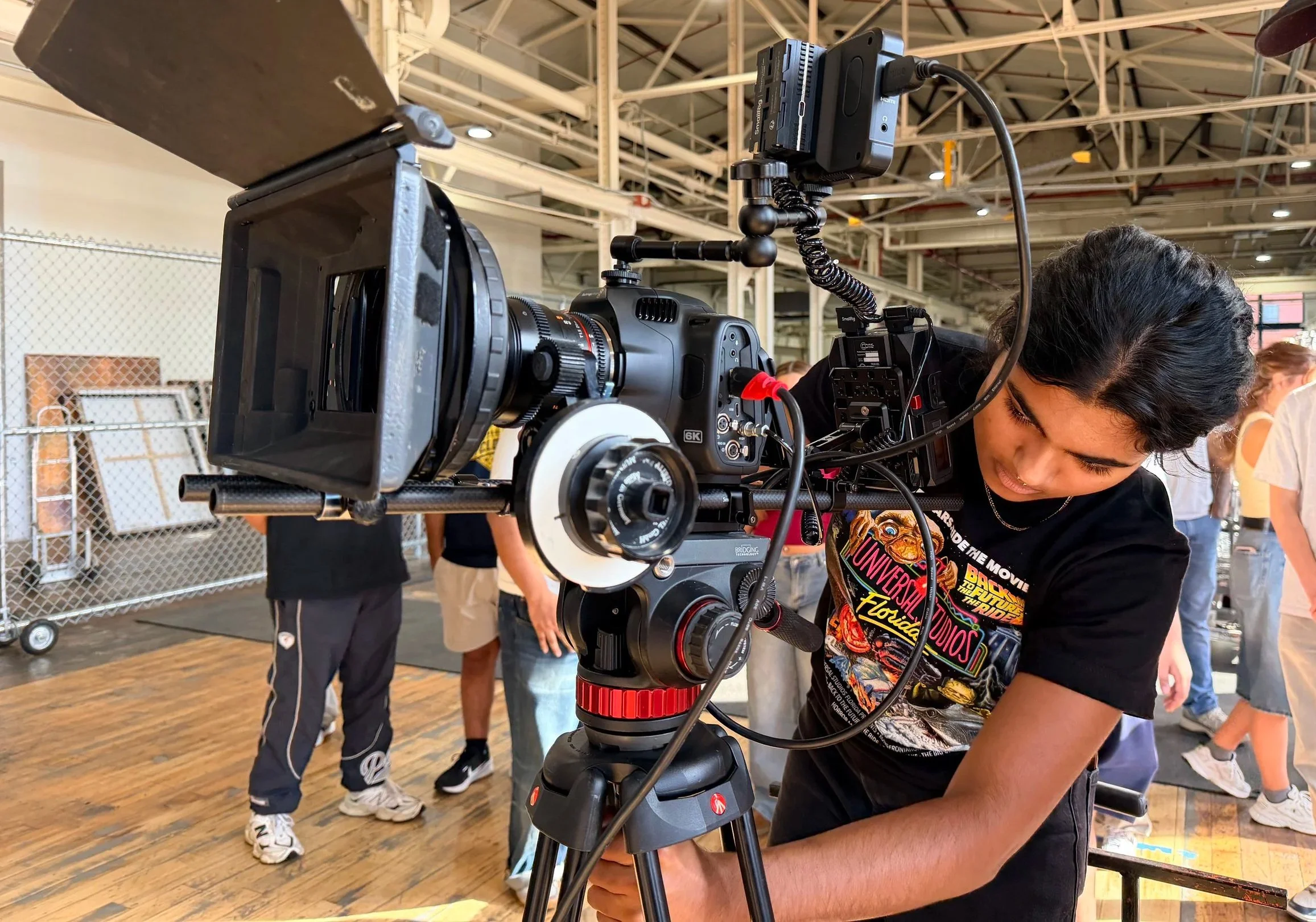
This hands-on course prepares students for entry-level work in the Camera Department, with a focus on the roles and responsibilities of the Camera Assistant (1st AC and 2nd AC fundamentals). Students will learn professional camera systems, lens handling, focus principles, camera builds, set workflow, and on-set etiquette. Emphasis is placed on technical precision, organization, communication, and collaboration with the Director of Photography, Operators, Grips, and Production.
Course Learning Outcomes:
By the end of the course, students will be able to:
· Understand the hierarchy and workflow of the Camera Department
· Safely build, operate, and break down professional camera systems
· Handle lenses, accessories, and media correctly
· Perform core 2nd AC duties and introductory 1st AC skills
· Communicate clearly and professionally on set
· Demonstrate readiness for entry-level camera assistant work
This hands-on course provides students with a comprehensive introduction to the camera department and the practical skills required to work effectively on professional film and television sets. Students will learn camera department roles, set etiquette and safety, camera systems, lenses and optics, power and media, camera builds, accessories, and fundamental focus techniques. Through practical exercises, students will gain experience handling camera equipment, changing and caring for lenses, building configurations for tripod, handheld, and shoulder setups, measuring distances, pulling focus, and managing essential camera department tools and equipment. The course introduces the core responsibilities of the 2nd AC and 1st AC, including slating, camera reports, equipment organization, camera preparation, and troubleshooting.
The course emphasizes teamwork, communication, efficiency, and real-world on-set workflow. Students will develop skills in supporting camera movement and stabilization equipment, coordinating with Grip and Electric and the Assistant Director team, and maintaining professional standards under production pressure. A full on-set simulation allows students to rotate through 1st and 2nd AC responsibilities while practicing camera builds, shooting, troubleshooting, communication, and wrap procedures. The course concludes with career-readiness guidance covering entry-level camera assistant pathways, union and non-union work, professional conduct, and practical set-survival skills, followed by a hands-on final evaluation of camera building, focus, workflow, and wrap procedures.