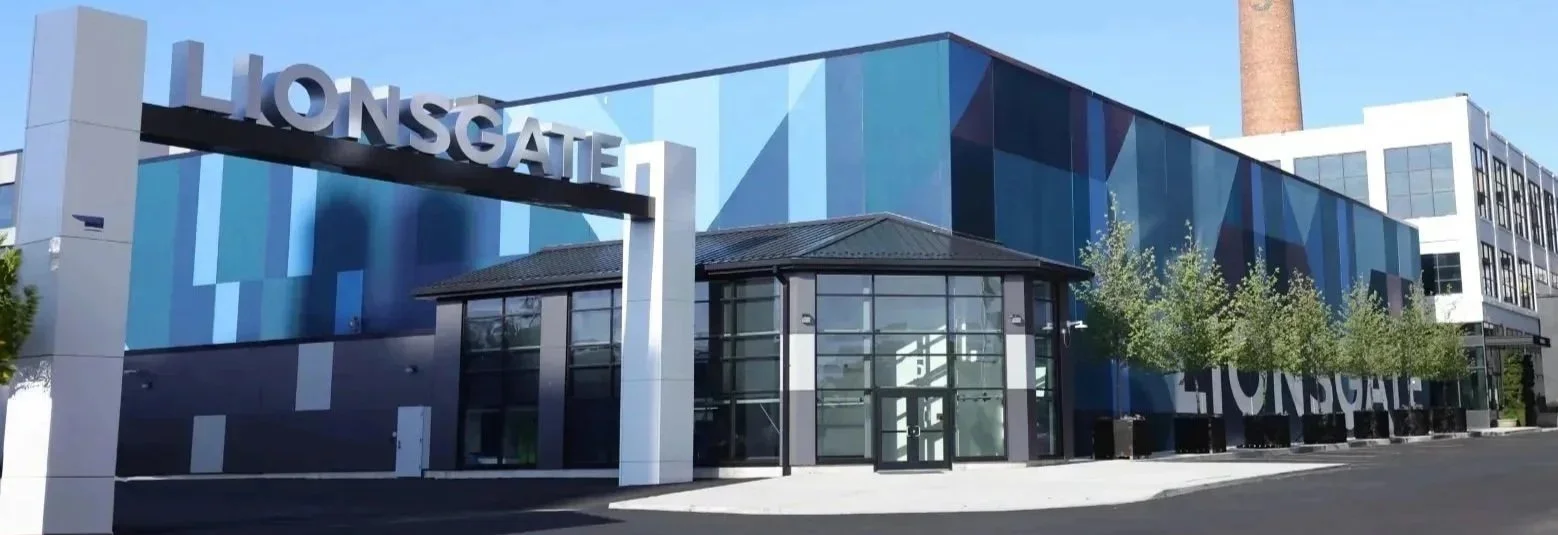
New Courses January 2026 hosted at Great Point Studios / Lionsgate location
All classes will be taking place at the studio location in Yonkers, New York. Seating will be limited.
Program Overview
The program offers professional training in the use of current motion picture equipment and facilities, combining hands-on-instruction with seminars led by experienced industry professionals who specialize in relevant topics. Designed to complement existing film and media programs at colleges and universities, the course of study provides an opportunity for students to earn *college credit through the University of Mount Saint Vincent or their current higher ed institution. Additionally, participants will gain access to advanced technology and resources that are often unavailable in traditional academic settings or out in the field.
*Credit available at an additional cost of $1,000 per credit hour – University of Mount Saint Vincent
Registration and Course Fees
Students can register independently or through an academic partner program.
Class Size will be limited per section to 20 students per course
Participation fee will be $1,600.00 per course / semester.
Additional Student Tech fee $250.00 per course
Classes will meet weekly - 3 hour sessions. Classrooms will be located at the Great Point Studios main lot in Yonkers, Westchester.
Registration Fees are for individuals not registering through a partner program.
Domestic Students - $65
International Students - $100*
*All fees listed in USD. International students will be responsible for any exchange rate fees, discrepancies, and adjustments.
Internship and teaching assignments, where applicable, will take place throughout The Great Point Studios campus and the Robert Halmi Sr. Academy of Film and Television school at their Ludlow campus.
The Courses
SPRING 2026
Classes begin Friday, January 30th, 2026
COURSE TITLE: Production Set Safety – Fridays 10:00 AM – 1:00 PM REGISTRATION CLOSED - COURSE FULL
COURSE TITLE: Tools of the Trade – Fridays 2:00 PM – 5:00 PM - 2 SEATS REMAINING
COURSE DESCRIPTIONS
JANUARY 2026 - SPRING SESSION
COURSE TITLE: The Studio: Tools of the Trade
From Tungsten to LEDs – Working with lighting units to create compelling visuals
Course Objectives: From Fresnels to open face, LEDs to practicals. Manipulating and enhancing light sources to create visual looks and how they work
Course Learning Outcomes: The mechanics of traditional and digital fixtures to selecting unitthat can best provide a desired image. Controlling light using Flags, nets, cookies, gels as they relate to the position of Gaffer and Lighting department.
Technical Exam: Setting up a unit and adjusting for a desired image quality and exposure.
Sample Sequence of Activity
Week 1: Introduction / Overview of Set Etiquette & Protocols, Crew Positions and on set responsibilities
Introduction / Mechanics of Tungsten and Day lighting units and color correction
Lab: Production cycle, Lighting crew jobs. Overview of lighting heads and rigging tools that will be throughout the course.
Week 2: Working with LED and electronic lighting units – Part 1
Safety and basics of electricity - AMPS to Voltage
Introduction to the fundamentals of on-set electrical safety, focusing on the relationship between amps, volts, and watts. Proper handling of power distribution systems to ensure safe and efficient lighting and equipment use on set.
Lab: The use and versatility of LED and electronic lighting units in modern production. Emphasis on color control, power efficiency, and creative lighting design.
Week 3: Working with LED and Tungsten/HMI units – Part 2
Power Distribution on Set
Lab: Exploration of LED, Tungsten, and HMI lighting units and their on-set applications. Focus on color balance, light quality, and selecting the right fixture for the desired visual effect. Students will be shown, on paper, how to balance loads and distribute power resources
Week 4: From Yoke to focus knob – Understanding the parts of a lighting unit.
Lab: A detailed look at the components and functions of lighting units. Emphasis on safe handling, maintenance, and maximizing fixture performance on set. Different types of lighting sources – Fresnels, Open Faces, HMIs, Soft Lights, and Practicals, overheads and planning. Students will be shown how to use a variety of lighting units and accompanying rigging options. Students attempt to control the units using flags, nets, and other light control techniques.
Week 5: Hot lights / Heavy lights and proper operation and safety – Rigging. Working with High-Temperature Units
Lab: Safe operation and rigging of hot and heavy lighting units used in production. Focus on proper setup, handling techniques, and on-set safety protocols. Proper handling, set-up, and placement of sources. What to use and not to use to control the units. Fire Safety & Heat Management / OSHA & Industry Safety Standards. Preparing the job site, safety resources, and exit plans
Week 6 / 7: From practicals to 10Ks, selecting the right units for the project and control. Generators, Lunch Boxes, Stingers, and running cable – Distributing and Balancing
Lab: The range of lighting options from practicals to 10Ks and their creative applications. Focus on selecting and controlling units to achieve the desired visual mood and effect. Students will learn about the different ways to power lighting units, distribute power, and run cables.
Week 8: Using lights on the ground / Using lights on an overhead rig
Lab: Techniques for safely and effectively using lights on the ground and in overhead rigs. Focus on placement, balance, and achieving optimal illumination for each setup.
Week 9: Controlling Intensity & Quality. Barndoors, cookies, dimmers, and light control – Shaping sources
Windows and natural light controls – Using Butterfly kits, Frames, and negative fill. Focus on techniques to shape, diffuse, and control the intensity and quality of light. Emphasis on the creative and technical methods to achieve desired visual outcomes.
Lab: Understanding color temperature, Indoor and outdoor lighting. Creating lighting effects and basic special effects using accessories.
Week 10: Studio Presentation / Guest Speaker
Week 11: Day for Night / Special effects lighting. Creative alternatives to lighting including working with battery powered units and practicals
Lab: The art of transforming daylight into cinematic night using lighting tricks and post-production magic. Crafting stunning visual illusions with in-camera special effects lighting techniques. Prompted lighting exercises using the tools presented throughout the course.
Week 12: Lighting through the Production Design / Working with Props and practicals
Lab: How lighting interacts with production design to shape mood, texture, and storytelling on screen. Using props and practicals to create immersive, visually compelling sets.
Week 13: DMX & Digital Control
Lab: Fundamentals of DMX protocols and digital lighting control to orchestrate dynamic, precision-driven lighting setups. Programming and operating intelligent fixtures.
Week 14: Manipulating the color, quality, and intensity of light, Lighting for Mood & Genre -
Lab: Shaping emotion and storytelling through the strategic control of light’s color, quality, and intensity. How lighting choices define mood and enhance genre across diverse cinematic styles.
Week 15: FINAL REVIEW
Putting together the equipment wish list and budgeting for the rentals, Troubleshooting / What can go wrong? Emergency Procedures & First Aid. Reviewing scenarios and procedures related to emergency situations on a production.
Lab: Group Exercise: Build a smart equipment wish list and budget effectively for rentals across all production scales. Discuss real-world troubleshooting strategies to anticipate, prevent, and solve common on-set challenges.
Prepping for the project - form teams and plan a lighting setup with a detailed safety plan. Culminating group exercise. Teams demonstrate their choices using the equipment presented throughout the course.